


King Crypto is facing renewed macroeconomic pressure after hotter-than-expected US inflation data strengthened expectations that the Federal Reserve could raise interest rates in December. Bitcoin sellers extended their activity, pulling the BTC/USD pair to major lows as investors reassessed the outlook for monetary policy and reduced exposure to risk assets. The inflation report also sent US Treasury yields higher and weighed on equities, reinforcing concerns that tighter financial conditions could persist.
Top Regulated Brokers
The pressure is coming from several directions. Crypto sentiment has deteriorated, the Fear & Greed Index has fallen to levels last seen in August, and US spot Bitcoin exchange-traded funds (ETFs) have continued to record outflows. With traders now focused on the Fed’s December 9 meeting, Bitcoin’s ability to attract fresh demand may determine whether the decline stabilizes or develops into a deeper correction.
Hotter CPI Puts the Fed’s December Decision Back in Focus
The October inflation report delivered an unwelcome surprise for markets. Headline CPI increased 0.4% month over month, accelerating from September’s 0.6% rise but exceeding economists’ 0.3% forecast. Core CPI, which excludes food and energy, also rose 0.3%, above the 0.2% consensus.
The Bureau of Labor Statistics did not publish the usual annual inflation rate because the 2025 government shutdown disrupted the October 2025 data collection, leaving the agency without a comparable year-earlier figure. Analysts say persistent price pressures remain a concern for policymakers.
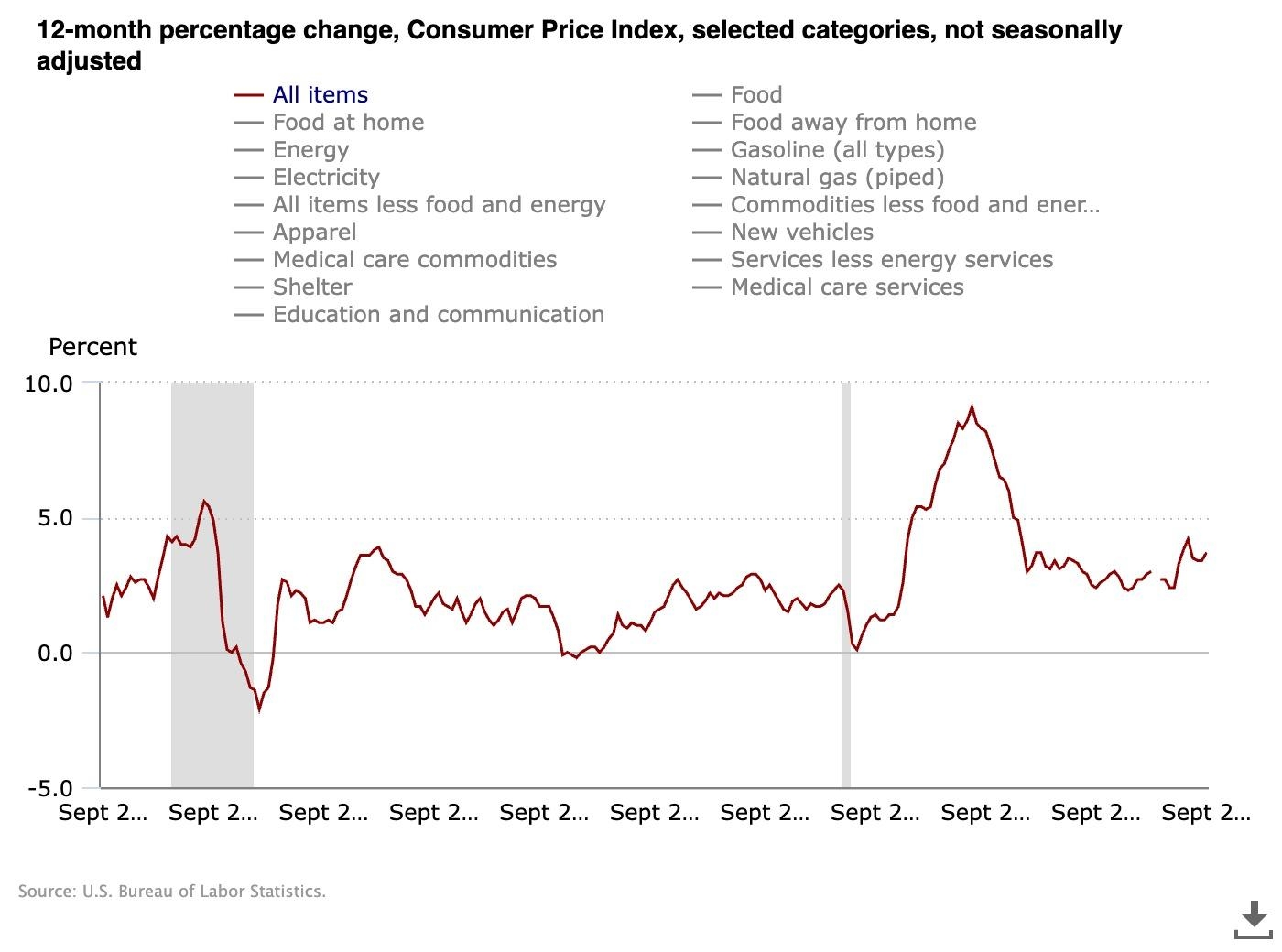
US CPI 12-month % change. Source: Bureau of Labor Statistics
Bitcoin initially extended its losses after the release, falling toward $72,600 and revisiting levels last seen in August. The move reflected a broader shift away from risk assets rather than an isolated reaction within crypto. Ether (ETH) and other major cryptocurrencies displayed weakness, while US equity markets moved lower as investors reassessed the likelihood of further monetary tightening.
The S&P 500 fell 0.38% on November 10, while the Nasdaq Composite declined 0.74% and the Dow Jones Industrial Average lost 0.30%. Treasury yields moved sharply higher. The two-year yield jumped about 18 basis points to 4.73%, while the 10-year yield rose roughly 13 basis points to 4.99%, approaching the psychologically important 5% level. The US dollar strengthened, while gold also came under pressure.
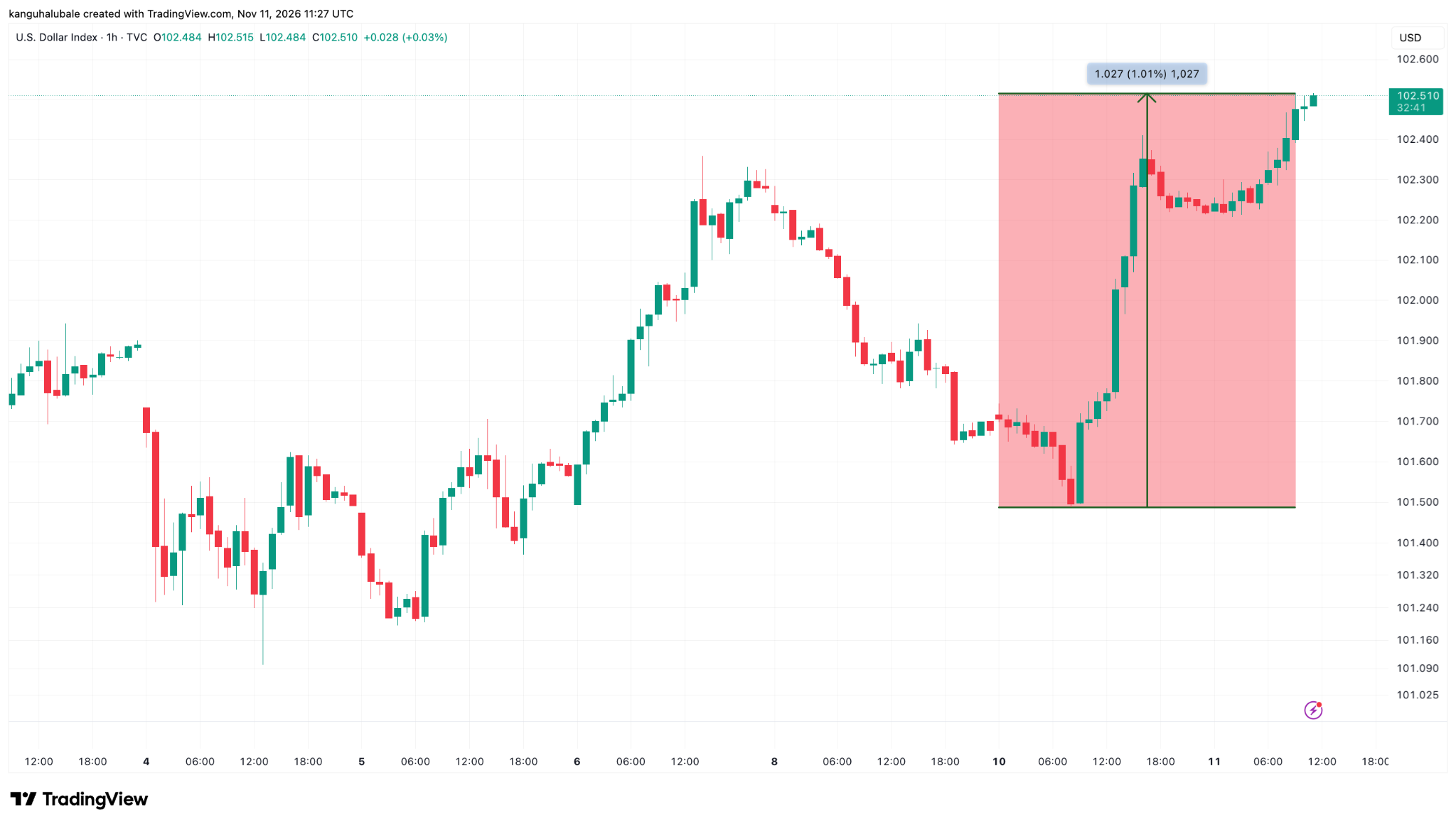
US Dollar Index. Source: TradingView
For Bitcoin, the concern is that higher yields increase the relative appeal of interest-bearing assets and raise the opportunity cost of holding non-yielding investments. A stronger dollar can also weigh on dollar-denominated assets, while tighter financial conditions may reduce liquidity available for speculative investments.
Capital markets commentator The Kobeissi Letter described the development as evidence that the “global rate hike cycle is accelerating,” highlighting the wider macroeconomic implications beyond the US CPI release.
Its assessment reflects concern that inflation pressures could keep central banks restrictive for longer, creating a difficult environment for risk assets.
“45% of global central banks have raised interest rates over the last 3 months, the largest total in 3 years. This proportion has surged +40 percentage points since March,” The Kobeissi Letter said in a recent X post, adding:
“The global monetary tightening cycle is gaining momentum.”
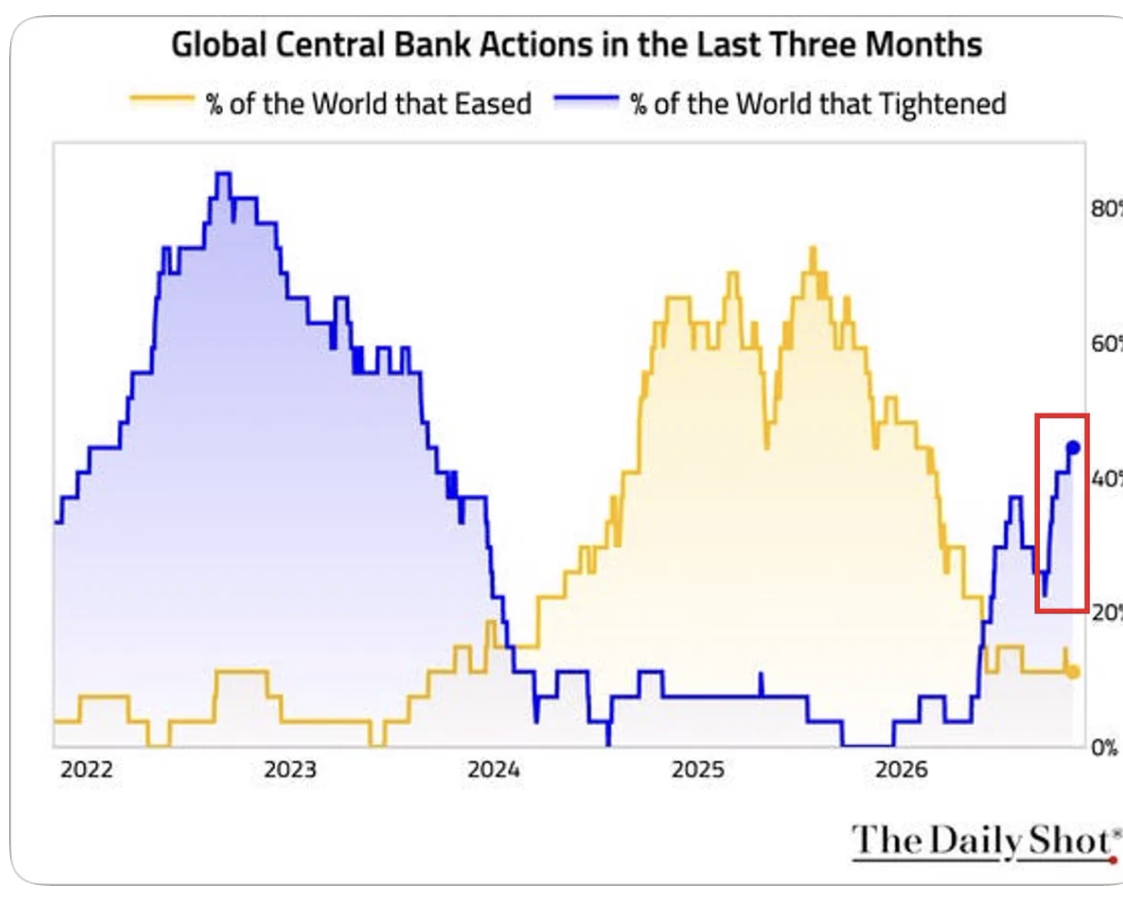
Global Central Bank actions over the last 90 days. Source: The Daily Shot
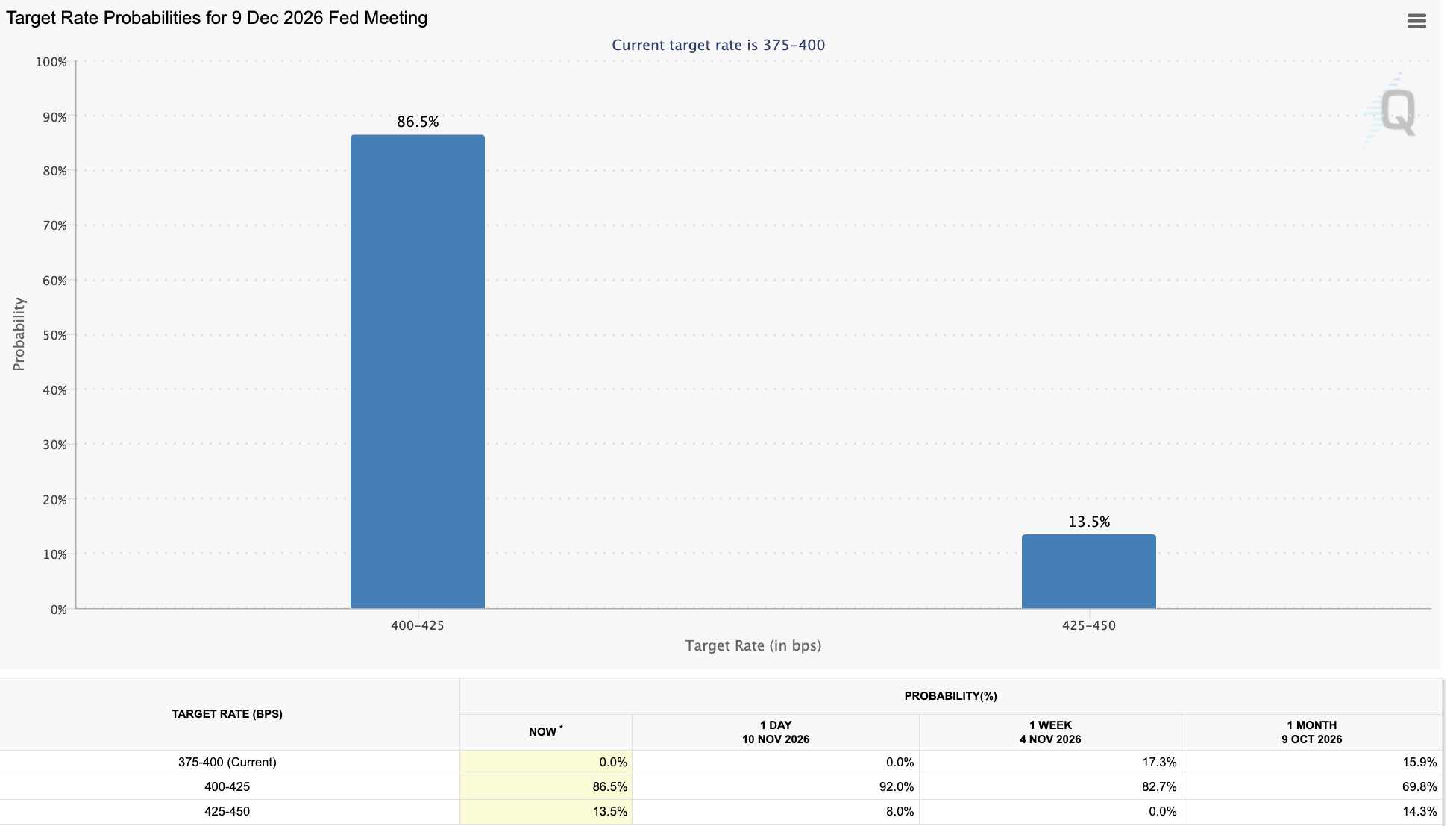
The Federal Reserve’s December 9 meeting is now the main event for traders. The latest data from CME Group’s FedWatch Tool maintained consensus for an 86.5% chance of a 0.25% hike at the Fed’s December meeting, compared with 69.8% one month earlier.
It also assigns a 13.5% probability to a larger 50-basis-point move. In other words, market participants are pricing in rate increase, with the main uncertainty concerning its size.
Polymarket bettors place the odds of a December hike at 95%, up from 63% a five days ago, while the odds of any 2026 hike rose to 95% from 63.5% as well.
If inflation remains persistent and policymakers signal further tightening, Bitcoin could face additional pressure.
Historically, Bitcoin has struggled during periods when investors anticipate tougher financial conditions. Higher borrowing costs reduce market liquidity while decreasing demand for higher-risk assets such as equities and digital assets.
Conversely, any evidence that price growth is cooling, or that the Fed is reluctant to tighten aggressively amid slowing economic activity, could ease some of the pressure on risk assets.
Crypto Fear and Greed Index Falls to Four-Month Lows
The macroeconomic shock has added to an already fragile market mood. The Crypto Fear & Greed Index has fallen to 29, its lowest reading since Aug. 11, placing the market in the fear territory.
The indicator combines factors such as volatility, trading volume, momentum and social activity to gauge investor sentiment. Its decline suggests that traders have become increasingly defensive as Bitcoin loses ground and expectations for interest rates shift.
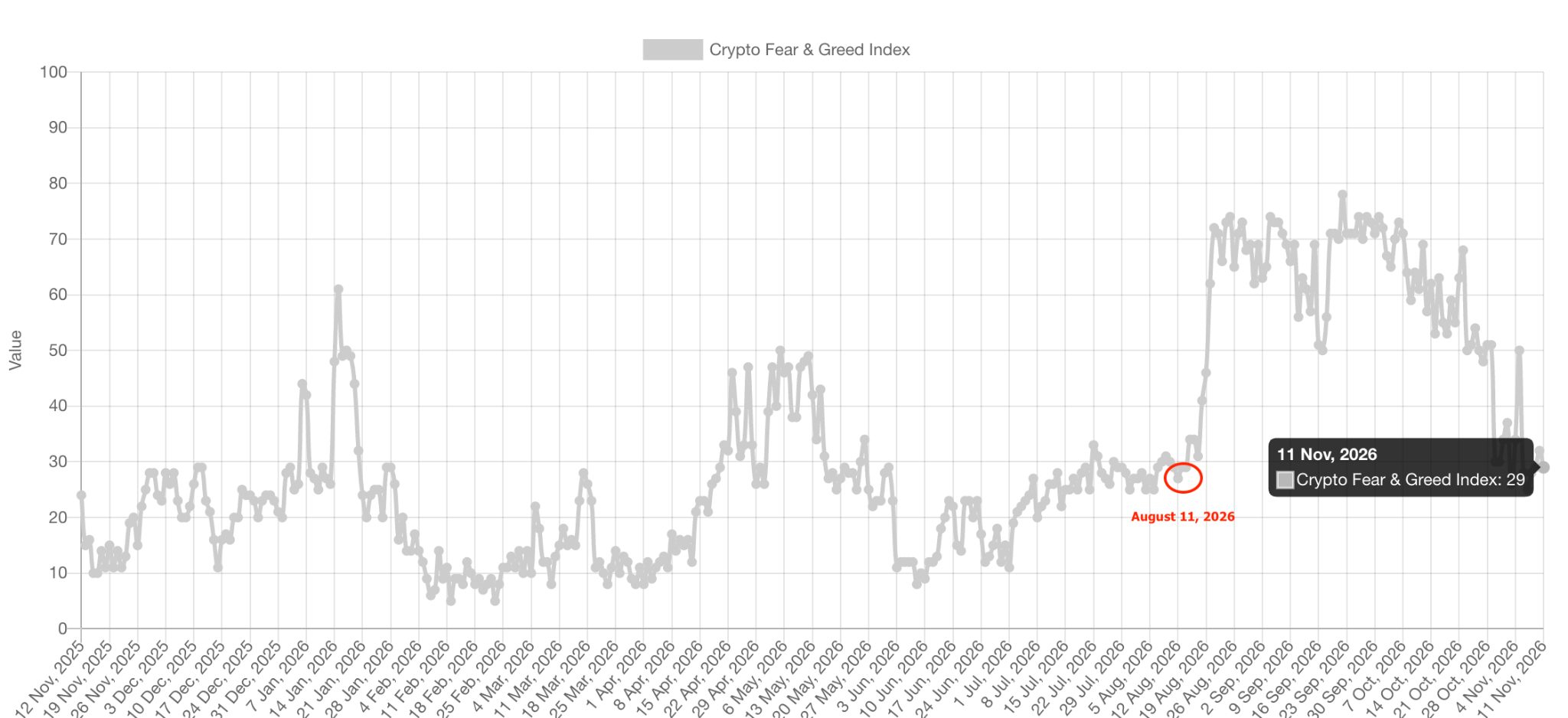
Crypto fear and greed index. Source: Alternative.me
Santiment’s social data points to a similar deterioration. The onchain data analytics platform described crypto sentiment as reaching “boiling point” as bearish commentary gained ground over bullish discussion.
The chart below shows that Bitcoin, Ethereum, and XRP sentiment has fallen deep into bearish territory, with BTC sitting at 0.82 bullish comments per bearish one, ETH at 0.88 and XRP at just 0.49.
However, Santiment also sees a possible contrarian opportunity in the growing pessimism.
“This level of retail pessimism can actually improve the setup for a crypto-wide recovery. Major crypto rallies begin when traders are fearful, selling at losses, and doubting that prices can bounce at all,” the onchain data provider said in a Monday post on X, adding:
“If we continue to see bearish commentary outweigh bullish commentary, especially for top caps, prices will inevitably see a strong relief rally.”
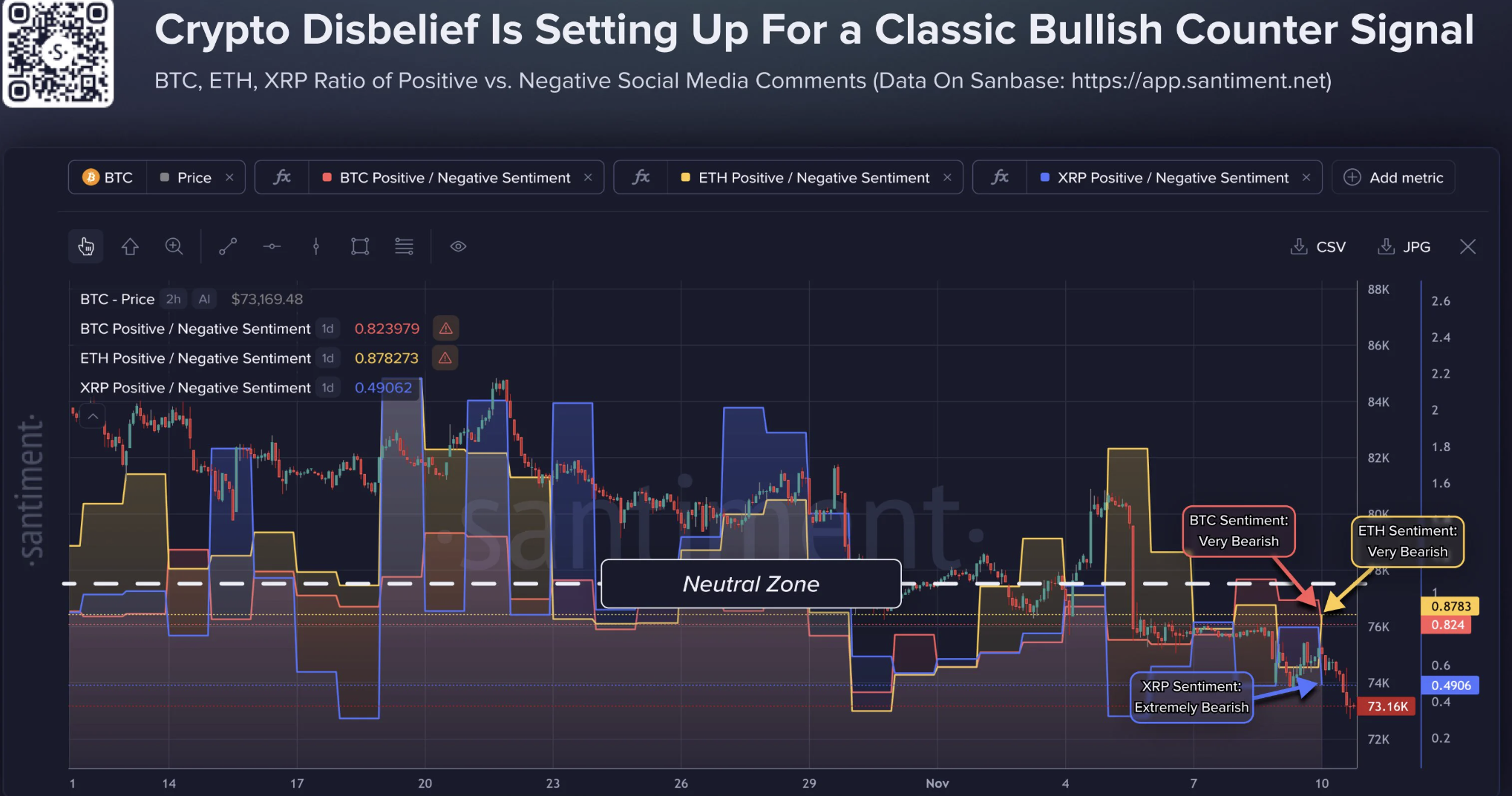
Ratio of positive to negative social media comments. Source: Santiment
Fear readings can indicate that investors are reducing exposure and that selling pressure is elevated. But they do not, by themselves, confirm that a market bottom has formed. A relief rally becomes more credible when sentiment stabilizes alongside improving spot demand, stronger trading volume and a recovery in important price levels.
Nevertheless, a sustained negative sentiment could eventually create conditions for a rebound if sellers become exhausted. However, if bearish commentary is accompanied by continued ETF redemptions and falling prices, it may reflect deteriorating demand rather than a contrarian buying opportunity
Bitcoin ETFs Extend Outflows as Institutional Demand Weakens
Spot Bitcoin ETFs provide another indication of the market’s deteriorating demand profile. The funds recorded net outflows for four consecutive trading sessions from Nov. 5 through Nov. 10, according to data from Farside. The withdrawals totaled approximately $1.14 billion over the four days.
The withdrawals moderated on Monday to $95 million, compared with more than $400 million on Nov. 5 and 6. That could indicate that the pace of selling is easing, although one smaller outflow does not establish a reversal in institutional demand.
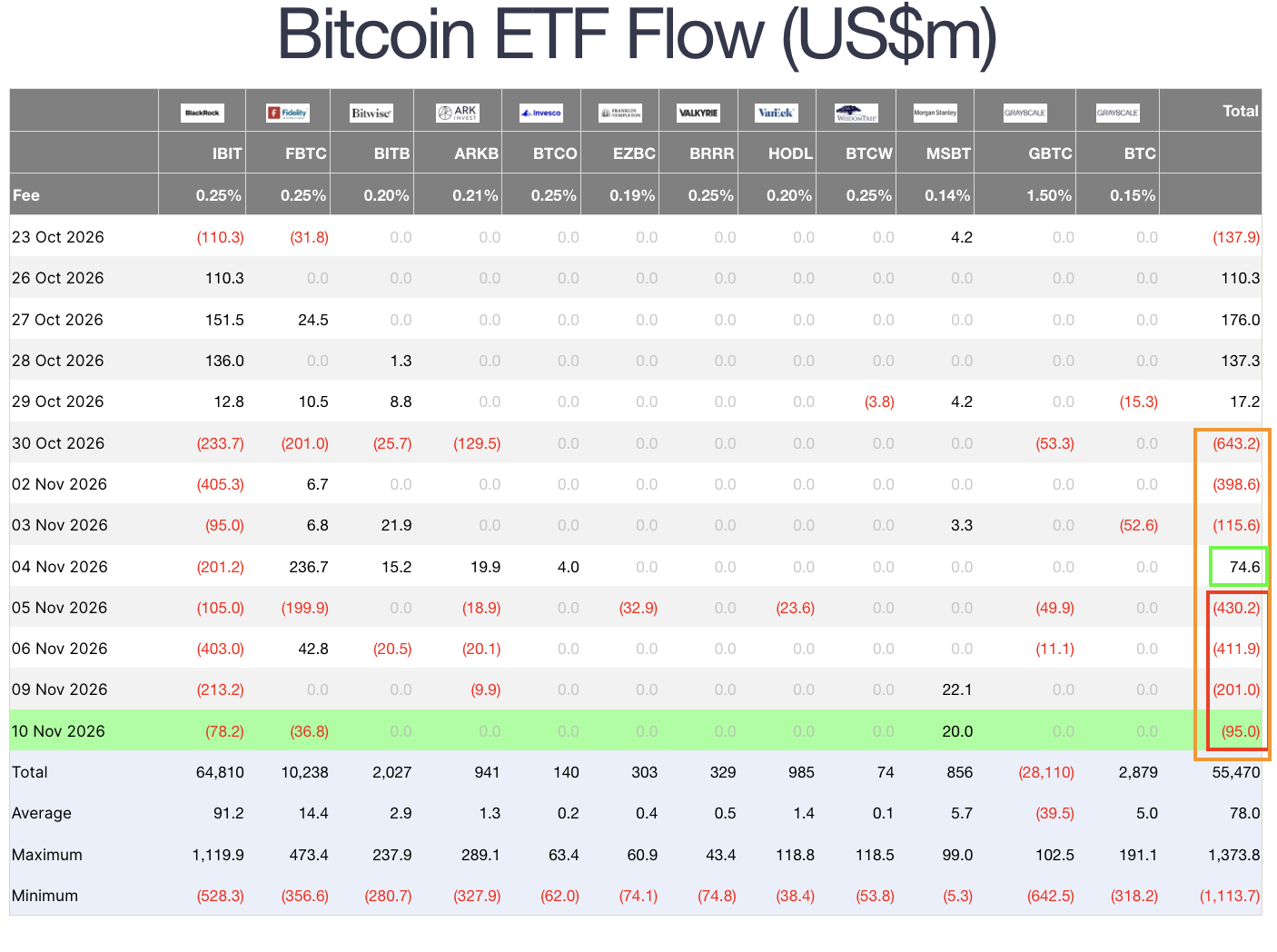
Spot Bitcoin ETF flows table. Source: Farside Investors
Glassnode also highlighted the scale of ETF selling, reporting approximately $696 million in net outflows on Friday, its largest single-day withdrawal since January. The analytics firm noted that a return to consistent inflows would help ease the pressure on Bitcoin. This data reinforces the importance of monitoring institutional demand alongside price action.
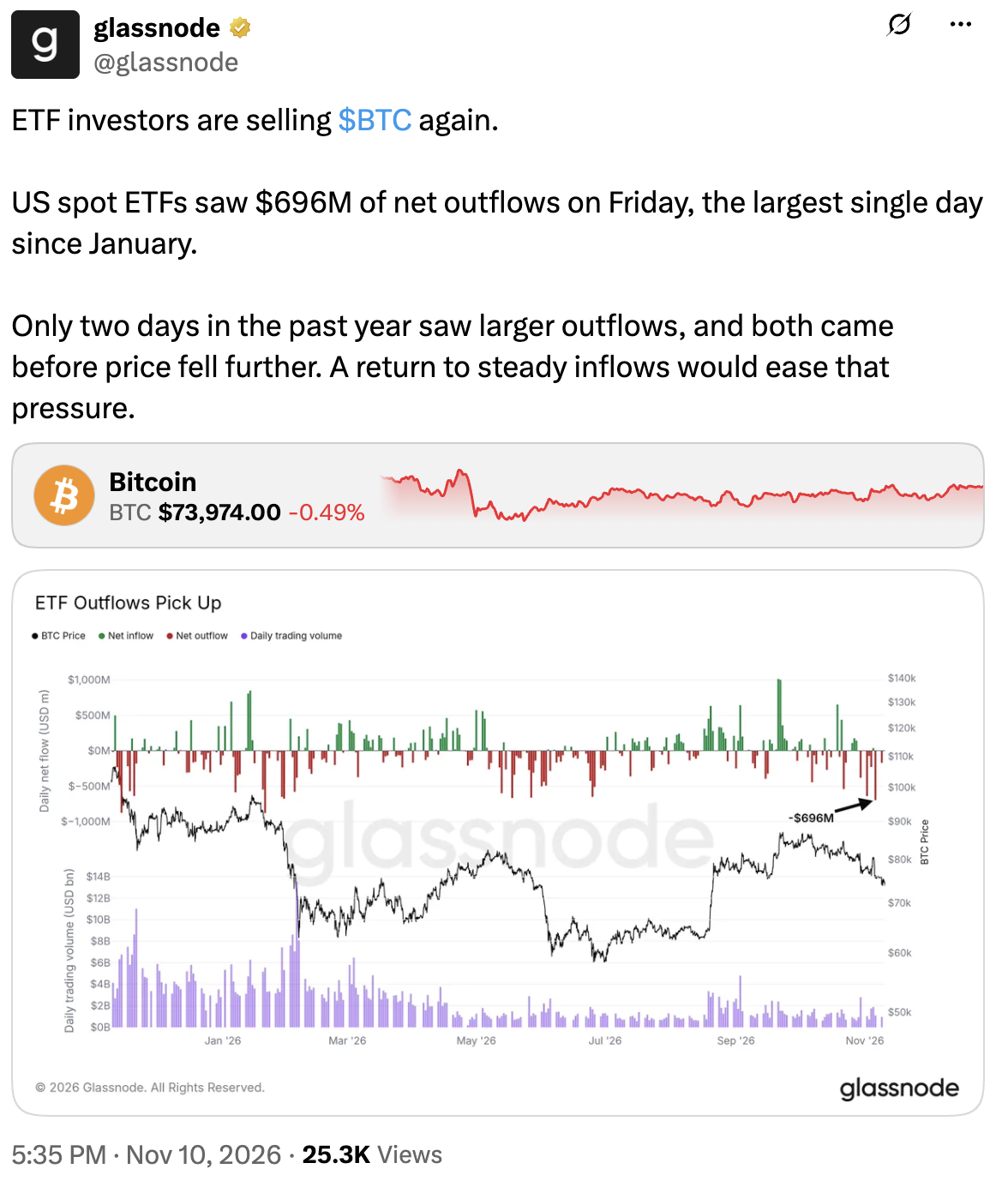
Spot Bitcoin ETF outflows accelerate. Source: Glassnode
A sustained return to positive flows would be an important sign that institutional buyers are stepping back into the market. Until then, persistent redemptions could make it harder for Bitcoin to recover, particularly if higher Treasury yields continue to compete with demand for risk assets.
Key Takeaways: Bitcoin Needs Stronger Demand to Reverse the Decline
Bitcoin’s move toward $72,000 reflects a combination of hotter US inflation, rising rate expectations, deteriorating sentiment and sustained ETF withdrawals. October’s CPI report exceeded forecasts on both headline and core measures, while Treasury yields surged and US equities declined. This has strengthened the case for another Fed rate increase in December and increased uncertainty around the liquidity outlook.
The Fear & Greed Index at 29 and Santiment’s bearish social readings show that retail confidence has weakened considerably. Such pessimism could eventually support a relief rally, but only if selling pressure begins to fade. The persistent ETF outflows remain a significant obstacle.
My view is cautiously bearish in the near term. Bitcoin needs a sustained improvement in ETF flows, a moderation in inflation-driven rate expectations and a recovery in broader risk appetite to establish a durable floor. The reduction in daily ETF withdrawals on November 10 is worth monitoring, but it is too early to call it a reversal.
The next signals to watch are the Fed’s communication ahead of December 9, the direction of Treasury yields and whether spot Bitcoin ETFs return to consistent inflows. If those conditions improve, deeply negative sentiment could help fuel a recovery. If inflation remains sticky and investors continue withdrawing capital, Bitcoin may struggle to regain momentum.
Ready to trade our analysis of Bitcoin? Here’s our list of the best MT4 crypto brokers worth reviewing.