


Oil futures have surged to around $120 per barrel amid the escalating US and Israel-Iran war, disrupting key supply routes and sending shockwaves through global markets. Asian stocks plunged in response, with investors scrutinizing the potential ripple effects on the price of Bitcoin (BTC) amid heightened economic uncertainty.
Middle East War Fears Grip the Global Economy
The intensifying US and Israel war against Iran has ignited widespread fears across the global economy, with oil prices skyrocketing due to disruptions in critical shipping routes like the Strait of Hormuz. This narrow waterway, through which about 20% of the world's oil flows, has seen attacks on tankers and curtailed exports from major producers such as Iraq, which reported a 70% plunge in output amid the crisis. As a result, the world is now experiencing its sharpest oil supply shock, with over 20 million barrels down daily.
Brent crude futures have climbed above $119, while WTI hovers near $105-$117, marking a surge of over 36% in seven days as traders price in prolonged supply risks. Analysts warn that if the conflict persists, prices could breach the all-time high above $148 sustainably, exacerbating inflationary pressures worldwide and straining energy-dependent economies in Europe and Asia.
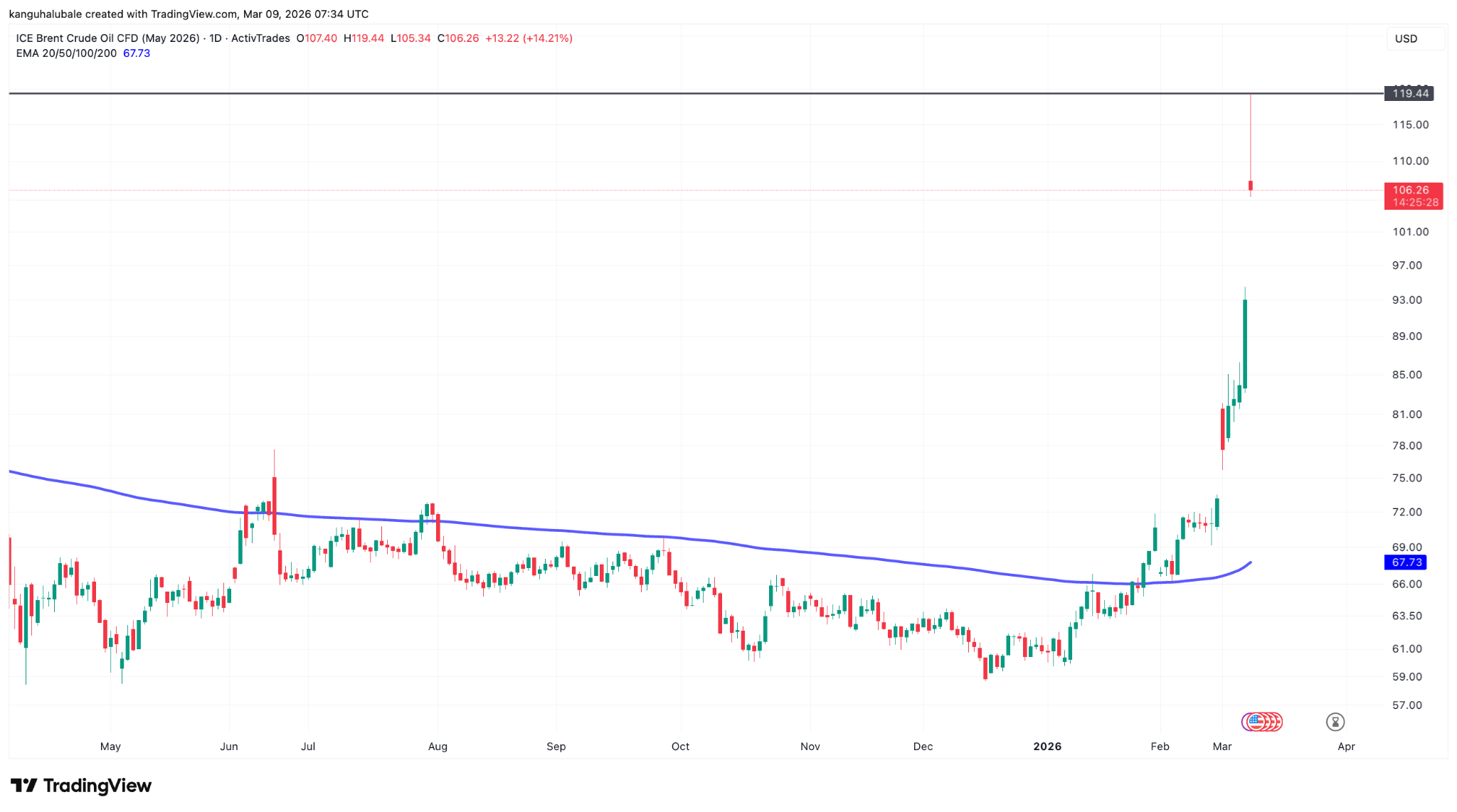
Oil futures prices, $. Source: TradingView
President Trump has addressed the spike, stating that the surge in prices is a "small price to pay" for ensuring safety and peace, emphasizing that oil costs may remain "a little high for a little while" but will drop sharply once the war concludes - potentially even lower than pre-conflict levels.
He argued that the action "had to be done," prioritizing geopolitical stability over short-term economic pain, and has proposed measures like government-backed tanker insurance and US Naval escorts to mitigate disruptions.
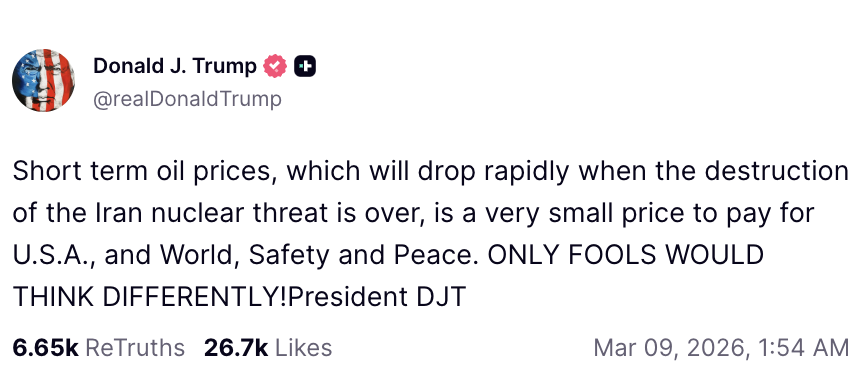
Source: Donald J. Trump on Truth Social
This stance reflects a broader view that the conflict's resolution could unlock greater energy independence for the US, but critics highlight risks to global growth, with potential knock-on effects like higher fuel costs rippling into supply chains and consumer spending.
The war's escalation, including strikes on Iranian oil sites and retaliatory attacks, has also boosted gold prices and increased the price of natural gas as safe-haven assets, while equity markets grapple with uncertainty. Emerging markets, particularly oil importers, face heightened vulnerability, potentially slowing recovery from prior economic headwinds. Overall, these fears underscore a fragile balance between security imperatives and economic stability, with oil’s volatility serving as a barometer for broader market sentiment.
Asian Stocks Plunge and US Stock Futures Drop Pre-Market
Asian stock markets have plunged sharply in response to the oil price surge, with major indices experiencing some of their worst sessions in years amid fears of an energy shock fueling inflation and delaying rate cuts.
South Korea's Kospi tumbled over 12% in a single day—its steepest drop since 2008—triggering circuit breakers as investors dumped tech-heavy stocks like Samsung and SK Hynix, vulnerable to higher energy costs and supply chain disruptions.
Japan's Nikkei fell more than 6%, extending losses from prior sessions, while Taiwan's index shed similar amounts, reflecting a broad risk-off sentiment across the region. The MSCI Asia-Pacific index outside Japan dropped 4.2%, highlighting how oil-importing economies are bearing the brunt of the crisis.
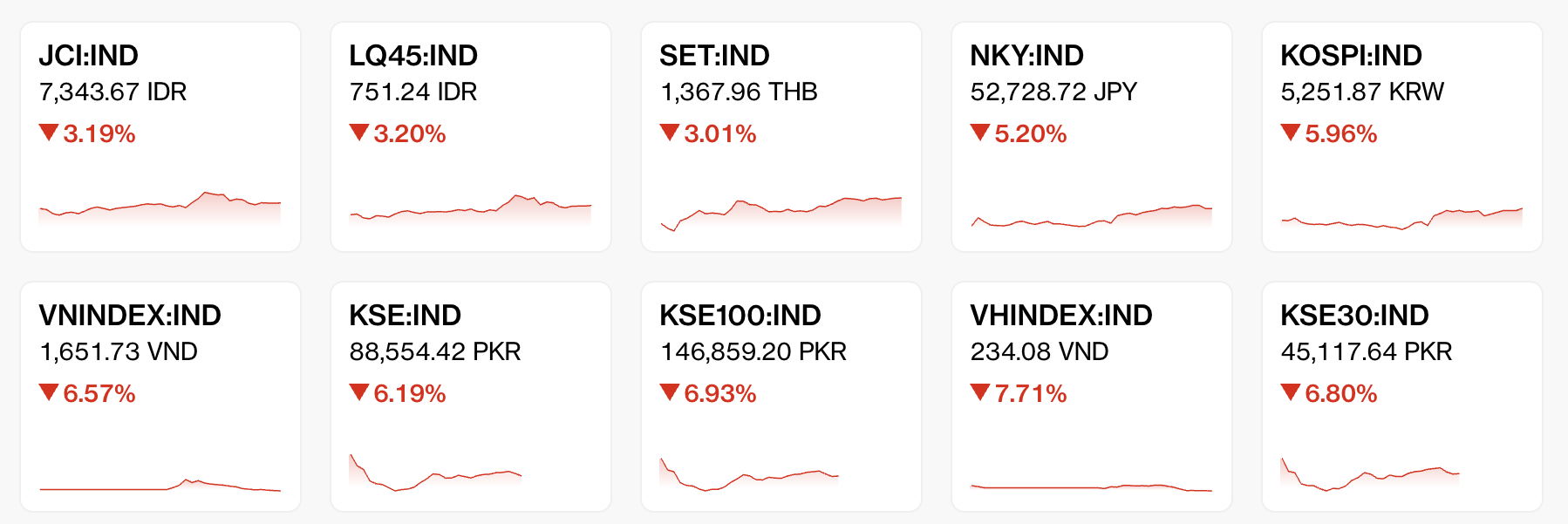
Asia-Pacific stocks, 24-hour performance, %. Source: Bloomberg
This route stems from concerns that sustained high oil prices—now above $100—will erode corporate profits, particularly in manufacturing and tech sectors reliant on stable energy inputs.
China's Shanghai Composite and Hong Kong's Hang Seng also declined, though less severely, as Beijing's lower growth targets for 2026 signal caution amid geopolitical tensions. Foreign capital outflows have intensified, with investors rotating toward safer assets, exacerbating volatility in markets that had rallied sharply in 2025 on AI optimism.
In the US, stocks pointed to pre-market declines, with S&P 500 and Nasdaq futures down 1-1.5% as traders anticipated spillovers from Asia's turmoil and oil's inflationary bite. The Dow futures similarly slipped,
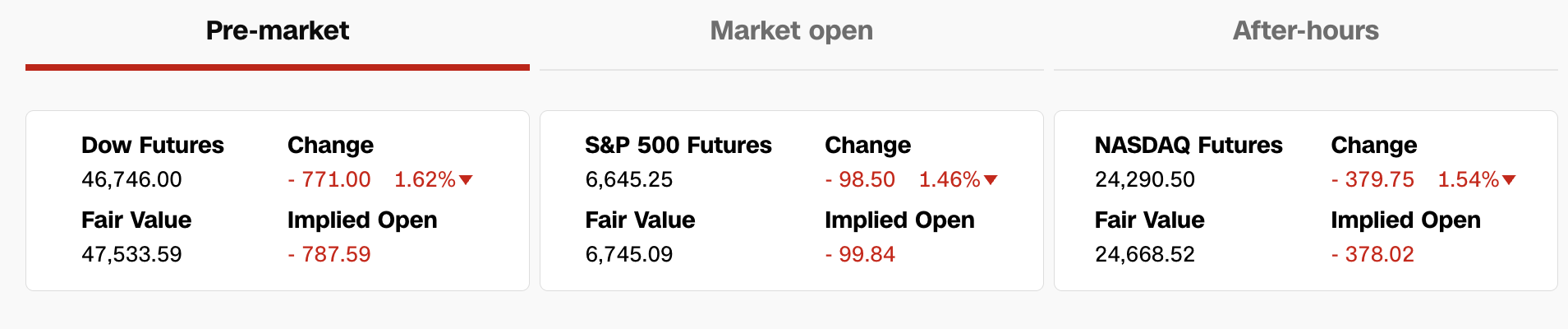
US stocks pre-market performance. Source: CNN markets
This reflects broader worries that higher energy costs could complicate the Federal Reserve's path to easing, potentially stoking a sell-off in rate-sensitive sectors. While some rebound occurred in later sessions, the initial drops underscore interconnected global markets, where Middle East instability amplifies downside risks for equities.
Oil Price Surge May Be Short-lived
Historical precedents suggest that oil price surges driven by geopolitical conflicts are often short-lived, with prices retreating once tensions ease, potentially paving the way for Bitcoin to rebound and climb higher as a hedge against uncertainty.
For instance, during the 2022 Ukraine crisis, crude oil spiked 50% while Bitcoin price dipped 18%. BTC went on to recover, however, rising 40% over the two weeks that followed.
A similar scenario played out after the Hamas attack on Israel in October 2023 and Israel's attack on Iran in 2025, as shown in the chart below.
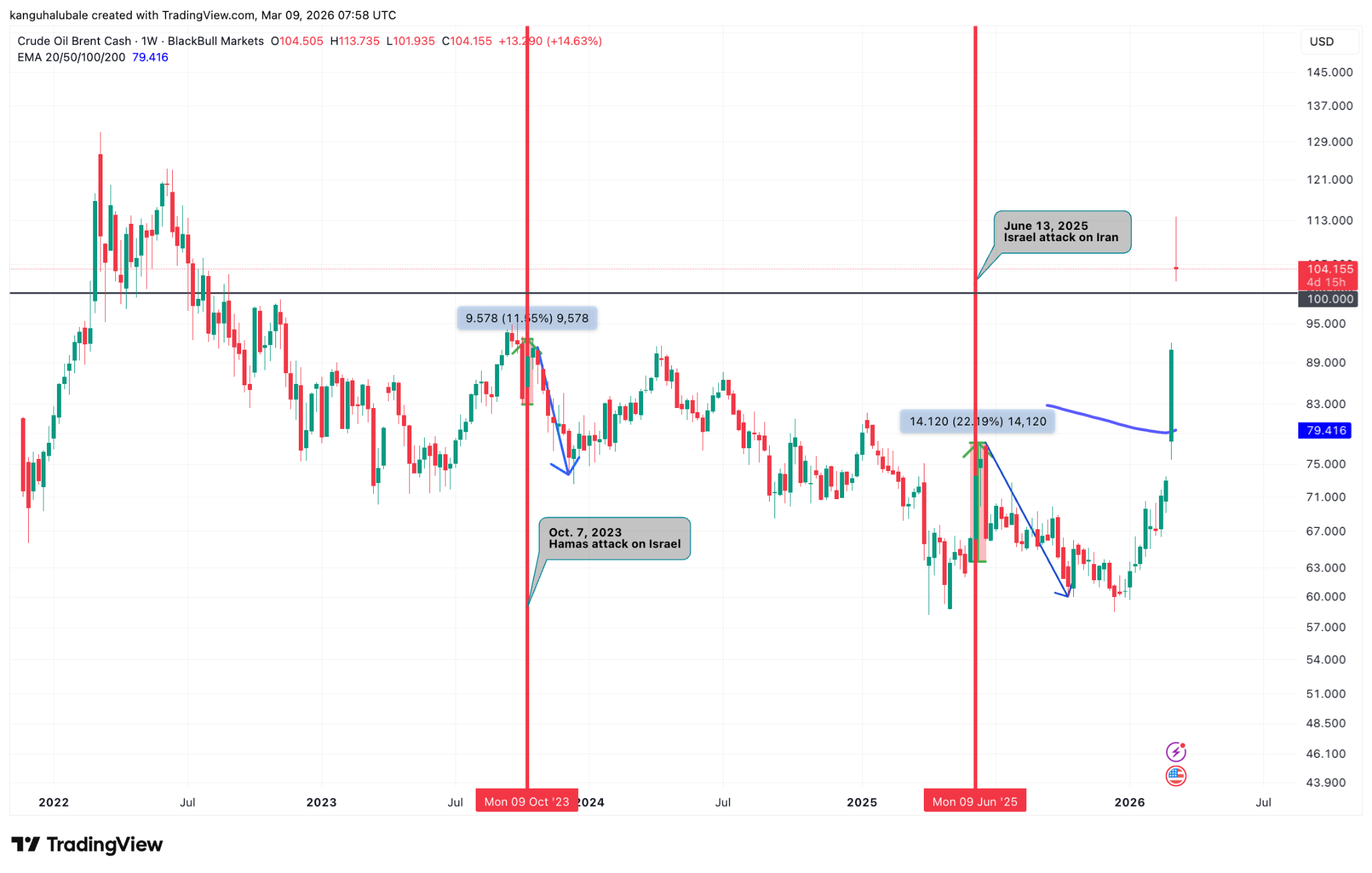
Oil price, USD vs. BTC/USD weekly chart. Source: TradingView
The current situation may be following a similar early-stage pattern.
Data indicates that while acute oil surges can pressure Bitcoin short-term, they often precede rallies. In the 2019 US-Iran tensions, oil rose 15%, and Bitcoin recovered quickly, gaining 200% that year as it decoupled from traditional commodities.
Prolonged shocks above $130 could tighten liquidity if central banks delay cuts, but Bitcoin's history as "digital gold" shines during wars: it rose alongside gold and oil in recent conflicts, up 15% over the past week despite initial dips.
Ready to trade our analysis of Bitcoin? Here’s our list of the best MT4 crypto brokers worth checking out.